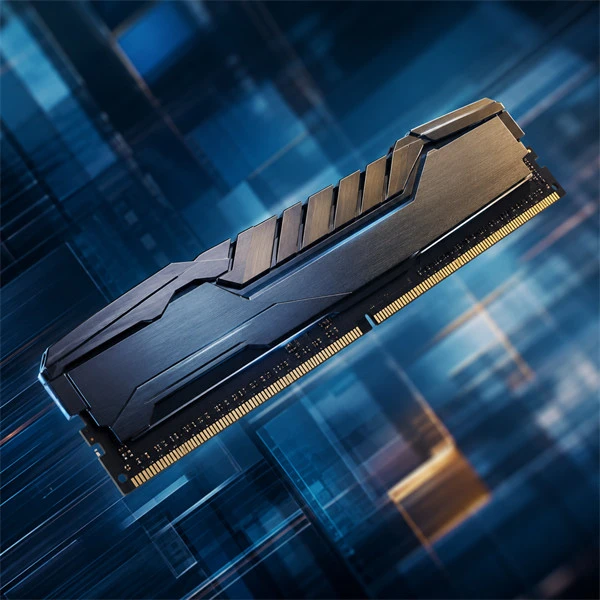
Wholesale DDR5 RAM Buying Guide 2026: Price, Speed & Suppliers
Wholesale DDR5 RAM Buying Guide 2026: Prices, Speeds and B2B Sourcing
DDR5 is becoming one of the most important product categories for computer memory distributors, PC assemblers, system integrators and OEM buyers.
As new desktop, notebook and workstation platforms move away from DDR4, demand for wholesale DDR5 RAM is expanding across Asia, Europe, the Middle East, Latin America and other international markets.
However, purchasing DDR5 in 2026 requires more than selecting a capacity and asking for the lowest quotation.
DDR5 prices remain affected by a tight global DRAM market, while specifications are evolving quickly. Buyers must consider capacity, frequency, module format, DRAM IC configuration, compatibility, testing, inventory turnover and supplier reliability.
According to TrendForce, conventional DRAM contract prices were expected to rise another 13%–18% quarter over quarter in Q3 2026. Although high prices are beginning to weaken traditional consumer demand, overall DRAM supply remains extremely tight.
For B2B buyers, the key question is therefore not simply:
“Is DDR5 expensive?”
A better question is:
Which DDR5 products should we buy, how much inventory should we hold, and how can we source them with lower procurement risk?
Why DDR5 Demand Is Growing in 2026
DDR5 adoption is being driven by a broad transition toward newer computing platforms.
Modern desktop processors, notebooks, gaming PCs, professional workstations and servers are increasingly designed around DDR5.
This transition creates two different sources of demand.
The first is new-system demand.
Computer manufacturers and system builders purchasing current-generation platforms increasingly need DDR5 as part of their standard configuration.
The second is upgrade demand.
As the number of DDR5 computers installed around the world increases, users begin upgrading systems from lower-capacity configurations to 16GB, 32GB or more.
This is important for wholesalers because DDR5 is gradually developing the same replacement and upgrade ecosystem that supported DDR4 for many years.
For distributors planning several years ahead, DDR5 should therefore be treated as a long-term core product rather than only a premium or enthusiast category.
DDR5 Price Trends in 2026
The DDR5 market is operating within an unusually strong global memory cycle.
AI infrastructure and data centers are consuming substantial DRAM resources, while memory manufacturers are prioritizing server products and other higher-value applications.
TrendForce reported that the overall conventional DRAM market would remain extremely tight during Q3 2026, with contract prices expected to rise 13%–18% quarter over quarter.
At the same time, price increases are becoming more difficult for consumer customers to absorb. High PC and electronics costs are beginning to weaken demand.
This creates a market with two opposing forces:
tight supply supporting prices, and weaker consumer demand limiting how quickly prices can continue rising.
For wholesale DDR5 buyers, this can result in volatile quotations and shorter price-validity periods.
TrendForce's August module-market data also showed DDR5 16GB 4800/5600 UDIMM spot quotations continuing to move higher.
This does not mean every finished DDR5 module will increase at exactly the same rate. Module prices depend on DRAM IC costs, PCB design, inventory, brand positioning and order quantity.
However, the data shows why professional buyers should monitor the DRAM market rather than assuming that DDR5 prices will steadily fall as production volume increases.
DDR5 16GB vs 32GB: Which Capacity Should Wholesalers Buy?
Capacity is one of the most important inventory decisions.
DDR5 16GB
DDR5 16GB is an important mainstream capacity for:
office computers,
consumer desktops,
gaming PCs,
notebooks,
Mini PCs,
and entry-to-mid-range system builds.
For many systems, 16GB provides a practical balance between performance and total system cost.
This makes 16GB particularly important for price-sensitive distributors and computer assemblers.
It can also be attractive in developing markets where customers are upgrading from 8GB or purchasing mainstream computers rather than high-end workstations.
DDR5 32GB
DDR5 32GB is becoming increasingly important for:
professional computers,
gaming systems,
content creation,
engineering applications,
software development,
workstations,
and AI-enabled PC workloads.
As software memory requirements increase, 32GB can offer better long-term positioning.
For B2B distributors, 32GB may therefore provide stronger growth potential, even if 16GB currently offers faster turnover in some markets.
Which One Should You Stock?
For many wholesalers, the correct answer is both.
Rather than choosing between 16GB and 32GB, inventory should reflect customer segmentation.
High-volume and price-sensitive channels may require more 16GB products.
Gaming, workstation and premium commercial channels may justify a larger percentage of 32GB inventory.
Historical sales data and customer inquiries should determine the final mix.
DDR5 4800 vs 5600: Understanding Speed
Frequency is another major consideration when buying DDR5 RAM.
DDR5 entered the mainstream PC market with speeds such as 4800MT/s, while newer platforms increasingly support 5200MT/s, 5600MT/s and higher specifications.
For mainstream B2B memory distribution, DDR5-4800 and DDR5-5600 remain important reference points.
DDR5-4800
DDR5-4800 has broad relevance among earlier DDR5 platforms.
It can be especially useful for:
existing DDR5 system upgrades,
older DDR5-compatible commercial computers,
repair channels,
and customers prioritizing compatibility.
Because the DDR5 market is evolving quickly, 4800 can increasingly behave like a mature specification rather than the newest performance option.
DDR5-5600
DDR5-5600 has become important for newer mainstream systems.
For distributors targeting recently released desktops, notebooks and commercial PCs, DDR5-5600 may provide stronger forward-looking demand.
However, buyers should not assume that every motherboard or CPU platform will automatically operate every module at its advertised speed.
Platform specifications, BIOS support and memory configuration all matter.
Should Wholesalers Stock DDR5-6000 and Higher Speeds?
Higher-speed DDR5 products can be attractive in gaming and performance markets.
Specifications such as DDR5-6000 and above are often associated with enthusiast systems and performance-oriented configurations.
However, this market should be approached differently from standard commercial DDR5.
High-frequency products may depend on:
specific motherboard support,
CPU memory-controller capability,
XMP or EXPO profiles,
timing specifications,
voltage settings,
and more demanding module validation.
For a general computer wholesaler, standard JEDEC-compatible DDR5 products may offer broader compatibility and easier inventory management.
For a gaming-focused distributor, higher-speed DDR5 can be an important premium category.
The ideal product strategy therefore depends on the customer base rather than simply stocking the highest available frequency.
DDR5 UDIMM vs DDR5 SO-DIMM
Module format is another fundamental purchasing decision.
DDR5 UDIMM
DDR5 UDIMM is primarily used in desktop systems.
Typical customers include:
PC assemblers,
desktop distributors,
gaming-system builders,
commercial computer suppliers,
OEM desktop manufacturers,
and system integrators.
For many B2B sellers, 16GB and 32GB DDR5 UDIMM products are key inventory items.
DDR5 SO-DIMM
DDR5 SO-DIMM is designed primarily for laptops, Mini PCs and other compact systems that support replaceable memory.
Demand can come from:
notebook repair businesses,
Mini PC manufacturers,
corporate IT maintenance,
laptop distributors,
refurbished-computer companies,
and upgrade channels.
A supplier serving broad computer-distribution markets should therefore normally offer both UDIMM and SO-DIMM options.
What About DDR5 RDIMM and Server Memory?
Server DDR5 is a different market from standard desktop and notebook memory.
RDIMMs are designed for compatible server and enterprise platforms and should not be treated as interchangeable with ordinary UDIMMs.
AI infrastructure is making this segment especially important.
TrendForce expects server DRAM contract prices to rise 13%–18% quarter over quarter in Q3 2026 and reports that supply conditions could remain constrained in 2027.
The firm estimates total RDIMM bit supply may grow only 15%–20% year over year in 2027, while server CPU shipments are expected to grow faster.
This suggests server-memory procurement will remain strategically important.
However, distributors entering the server-memory market should pay much greater attention to platform qualification, memory rank, capacity, server compatibility and customer requirements.
Why DRAM IC Selection Matters
DDR5 module pricing cannot be evaluated only by capacity and frequency.
DRAM IC configuration matters.
Two DDR5 16GB 5600 modules can use different DRAM solutions and may therefore have different costs, compatibility characteristics and supply availability.
Wholesale buyers should ask:
Who manufactures the DRAM IC?
Is the IC solution fixed?
Can the solution change between production batches?
Are alternative ICs qualified?
Can the supplier maintain the same specification for repeat orders?
For ordinary wholesale channels, some component flexibility can help keep prices competitive.
For OEM and industrial customers, however, stable specifications may be more valuable than the absolute lowest price.
Why PCB and SPD Quality Matter
DDR5 operates at higher data rates than previous mainstream memory generations, making module design and signal integrity especially important.
PCB design, component layout and manufacturing quality can affect system stability.
SPD configuration is also important because the system relies on module information to identify supported operating parameters.
Buyers should therefore evaluate more than the DRAM IC brand.
A professional memory module supplier should control:
PCB design,
component assembly,
SPD programming,
functional testing,
compatibility testing,
and final quality inspection.
For private-label products, these technical details are more important to long-term brand reputation than external packaging.
How to Compare Wholesale DDR5 Quotations
When comparing suppliers, make sure quotations are based on the same technical requirements.
For example, “DDR5 16GB” is not enough.
A useful RFQ should include:
DDR5 capacity
Frequency
UDIMM or SO-DIMM
ECC or non-ECC
Required IC specification
Quantity
Packaging
OEM requirements
Warranty
Destination country
Expected delivery date
For example:
“Please quote DDR5 16GB 5600 UDIMM, non-ECC, 1,000 pieces. Please confirm DRAM IC solution, MOQ, lead time, warranty and OEM packaging options.”
This produces a much more meaningful quotation than simply requesting a DDR5 price list.
What Determines Wholesale DDR5 RAM Prices?
Several variables determine the final B2B price.
DRAM IC Cost
DRAM is the main cost driver.
When upstream DRAM prices rise sharply, module quotations normally follow.
Capacity
A 32GB module requires substantially more memory capacity than a 16GB module, so buyers should compare cost per module as well as cost per gigabyte.
Frequency and Performance
Higher performance specifications can carry different costs because of component selection, testing and market positioning.
Order Quantity
Large orders usually provide better manufacturing and logistics efficiency.
However, obtaining a slightly lower unit price is not always worth taking excessive inventory risk.
OEM Packaging
Customized labels, retail boxes, barcodes and private-label designs increase costs compared with standard bulk packaging.
Testing Standards
More extensive testing can increase production costs but reduce field failures and customer returns.
How Much DDR5 Inventory Should a Distributor Hold?
DDR5 technology is growing, but it is also evolving quickly.
This creates an important inventory challenge.
Wholesalers need sufficient stock to serve growing demand without accumulating large quantities of specifications that may lose popularity as platforms move toward higher speeds.
One useful strategy is:
Core products: Maintain safety stock for consistently selling specifications.
Growth products: Increase inventory gradually as customer demand becomes established.
High-speed or special products: Purchase according to confirmed demand or clear sales data.
This is particularly useful for DDR5 because the market is transitioning more quickly than mature DDR4 categories.
Should Buyers Purchase DDR5 Now or Wait for Lower Prices?
There is no universal answer.
For confirmed projects and regular customer demand, repeatedly delaying purchases in expectation of lower prices may create supply risk.
The current 2026 DRAM environment remains tight.
TrendForce expects AI-related demand growth to outpace supply expansion across the three major DRAM manufacturers in 2027, while HBM and other advanced products continue consuming substantial manufacturing resources.
That provides support for a relatively tight memory market.
However, B2B buyers should also avoid treating RAM purely as a speculative commodity.
Consumer demand is showing signs of pressure from high component prices, and memory remains a cyclical industry.
A sensible procurement strategy is therefore based on real sales demand, inventory turnover and project forecasts rather than attempting to perfectly predict future DRAM prices.
How to Choose a DDR5 RAM Supplier
A reliable DDR5 RAM supplier should offer more than a low quotation.
B2B buyers should evaluate:
DRAM IC transparency,
PCB quality,
SPD programming,
testing capability,
compatibility,
specification consistency,
MOQ,
lead time,
OEM support,
warranty,
export experience,
and communication.
Samples are especially useful when working with a new supplier.
For large projects, buyers should also confirm whether the approved module configuration can remain consistent across future production batches.
Conclusion
Wholesale DDR5 RAM is becoming a core growth category for the global computer-memory market in 2026.
As new desktop, notebook and workstation platforms move toward DDR5, demand for 16GB, 32GB and higher-capacity modules should continue expanding.
However, the transition does not mean sourcing DDR5 is automatically simple.
The global DRAM market remains tight, AI and server applications continue to influence manufacturing capacity, and DDR5 specifications are evolving rapidly.
For B2B importers and distributors, successful purchasing requires balancing:
price,
capacity,
frequency,
compatibility,
inventory turnover,
quality,
and supply stability.
DDR5 16GB can provide strong mainstream demand, while 32GB offers growing opportunities in gaming, professional and high-performance systems.
DDR5-4800 continues to serve existing DDR5 platforms, while DDR5-5600 and newer specifications are increasingly relevant to current-generation computers.
The right product mix ultimately depends on your target customers.
Looking for a wholesale DDR5 RAM supplier?
We supply DDR5 memory solutions for distributors, PC assemblers, system integrators, OEM customers and international importers.
Send us your required capacity, frequency, UDIMM or SO-DIMM specification, quantity and destination country to request current DDR5 pricing, MOQ, lead time and OEM options.
Frequently Asked Questions
What DDR5 capacity is best for wholesale?
16GB is an important mainstream capacity, while 32GB is increasingly popular for gaming PCs, professional computers and workstations. Many distributors benefit from carrying both.
Is DDR5-5600 better than DDR5-4800?
DDR5-5600 provides higher data rates and is increasingly relevant to newer platforms. However, DDR5-4800 remains useful for compatible existing systems. Buyers should match memory to the target platform.
Is DDR5 RAM getting cheaper in 2026?
Not consistently. Although DDR5 production continues expanding, the overall DRAM market remains tight and AI/server demand is absorbing significant manufacturing capacity.
Should wholesalers buy DDR5 16GB or 32GB?
16GB may provide faster turnover in mainstream and price-sensitive channels, while 32GB can offer stronger growth potential in premium and professional markets.
Can DDR5 RAM be customized with an OEM brand?
Yes. Professional suppliers may support custom labels, packaging, barcodes and private-label programs. Buyers should confirm MOQ, warranty and technical-specification consistency.
What should I include in a DDR5 RFQ?
Specify capacity, frequency, UDIMM or SO-DIMM, ECC requirements, quantity, IC requirements, packaging, destination and expected delivery schedule.