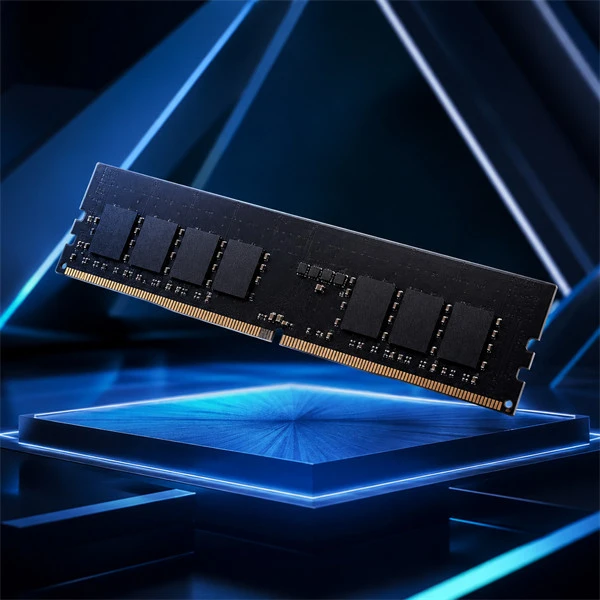
DDR4 8GB vs 16GB vs 32GB: Best RAM for Wholesale 2026
DDR4 8GB vs 16GB vs 32GB: Which RAM Capacity Sells Best in Wholesale Markets?
DDR5 adoption continues to grow, but DDR4 remains an important product category for computer distributors, repair businesses, system integrators, refurbished-PC suppliers and international memory wholesalers.
One of the most common questions facing B2B buyers is:
Should we stock DDR4 8GB, 16GB or 32GB?
There is no single capacity that is best for every country or customer segment.
DDR4 8GB continues to serve price-sensitive and basic-computing markets. DDR4 16GB offers a strong balance between price, performance and broad compatibility. DDR4 32GB addresses higher-performance, workstation and specialized applications.
For many general-purpose distributors, DDR4 16GB can be considered the most balanced core inventory category, while 8GB remains important for lower-cost markets and 32GB is better managed as a more targeted product.
However, inventory decisions should be based on customer demand, turnover and platform mix rather than capacity alone.
The situation is especially important in 2026 because DDR4 supply is becoming structurally tighter.
TrendForce reported that major DRAM manufacturers are prioritizing server products, squeezing consumer and PC DRAM supply. It expects mature-product shortages to remain difficult to resolve in the near term. (TrendForce)
For wholesalers, choosing the right capacity can therefore make a significant difference to both inventory turnover and purchasing risk.
DDR4 Is Mature, but Demand Has Not Disappeared
DDR4 is no longer the newest PC memory technology, but the global installed base remains enormous.
Millions of desktops, laptops, office PCs, industrial computers, POS systems and embedded devices still use DDR4.
This creates continuing demand from several channels:
PC upgrades
Computer repair
Refurbished computers
Office IT maintenance
Industrial systems
Education projects
System integration
Budget PC assembly
Unlike a new-system market, replacement demand does not disappear when a new technology launches.
A business may continue using a DDR4 computer for several more years and simply upgrade it from 8GB to 16GB.
A repair company may replace a failed SO-DIMM instead of recommending a new laptop.
An industrial customer may need exactly the same DDR4 platform because changing hardware would require additional testing or certification.
For B2B distributors, this makes DDR4 a mature but still commercially relevant category.
Why Capacity Selection Matters More in 2026
DDR4 inventory planning has become more difficult because supply and demand are changing at different speeds.
Demand is gradually shifting toward DDR5 for new systems.
At the same time, DRAM manufacturers are reducing their focus on mature DDR4 products while prioritizing server DRAM and more advanced memory.
TrendForce describes the current DRAM market as extremely tight and forecast conventional DRAM contract prices to rise 13%–18% quarter over quarter in Q3 2026. (TrendForce)
On August 31, its spot-market data showed DDR4 8Gb 3200 and DDR4 16Gb 3200 chip prices still moving upward during the session. These are chip-level prices rather than finished-module quotations, but they demonstrate that mature DDR4 components remain under pricing pressure. (TrendForce)
This means wholesalers need to be more selective.
Holding the wrong DDR4 capacity for too long can create inventory risk, while failing to stock popular capacities can result in missed orders during a supply shortage.
DDR4 8GB: Still Important for Cost-Sensitive Markets
DDR4 8GB remains one of the most widely recognized entry-level memory configurations.
It is particularly relevant for:
basic office computers,
refurbished PCs,
education projects,
POS equipment,
budget desktop systems,
entry-level laptops,
and repair or replacement applications.
Advantages of DDR4 8GB for Wholesalers
The main advantage is affordability.
Customers building or repairing lower-cost PCs often prioritize total system price over maximum performance.
An 8GB module can also be useful when customers want to add memory to systems that already contain another 8GB module.
This creates ongoing upgrade demand.
For distributors serving developing markets or highly price-sensitive channels, DDR4 8GB can therefore remain an important volume product.
Risks of Overstocking DDR4 8GB
The main challenge is that software memory requirements continue to increase.
For modern multitasking, browser-heavy office use and more demanding applications, many users increasingly prefer 16GB.
As a result, 8GB can gradually become concentrated in entry-level applications rather than being the universal mainstream configuration it once was.
For wholesalers, the practical strategy is usually to maintain 8GB inventory where there is proven demand rather than assuming that low price automatically means fast turnover.
DDR4 16GB: The Most Balanced Wholesale Capacity
For many B2B memory distributors, DDR4 16GB represents the strongest balance of affordability, performance and market coverage.
It is suitable for:
office-PC upgrades,
general business computers,
refurbished systems,
mainstream desktops,
laptops,
Mini PCs,
gaming upgrades,
and system-integration projects.
A computer originally configured with 8GB can receive a meaningful performance and usability improvement when upgraded to 16GB.
At the same time, 16GB is not as expensive as higher-capacity configurations.
This makes DDR4 16GB relevant to both price-conscious and performance-conscious customers.
Why 16GB Can Be a Core Inventory Product
For a distributor that wants to simplify inventory, 16GB has several advantages.
It can serve both replacement and upgrade markets.
It is available in UDIMM and SO-DIMM formats.
It works across a broad range of relatively recent DDR4 systems.
It is also large enough for many modern office and general computing requirements.
TrendForce's module spot data from August 17 showed DDR4 16GB 3200 UDIMM prices continuing to rise, with the session average increasing 1.50%. This illustrates that demand and tight availability can continue to support the category even late in the DDR4 lifecycle. (TrendForce)
For many wholesalers, 16GB therefore deserves the largest share of core DDR4 inventory—but actual sales data should always determine the final mix.
DDR4 32GB: Higher Value, More Specialized Demand
DDR4 32GB serves a different market.
Typical applications include:
professional workstations,
content creation,
engineering software,
virtual machines,
software development,
high-performance desktops,
industrial computers,
and specialized commercial applications.
These customers are generally less focused on achieving the lowest possible memory cost and more concerned with capacity and performance.
Advantages of DDR4 32GB
The higher capacity means a higher order value per module.
It can also serve customers who want to maximize the usable life of existing DDR4 platforms rather than replacing an entire workstation.
This can create profitable opportunities for distributors serving technical or professional customers.
Risks of DDR4 32GB Inventory
The total addressable customer base is usually smaller than for 8GB or 16GB.
Turnover may therefore be slower.
For a general wholesaler, large speculative inventories of 32GB DDR4 can tie up more capital.
A more conservative approach is often appropriate:
maintain limited stock for recurring customers and purchase larger quantities against confirmed projects.
DDR4 8GB vs 16GB vs 32GB: Quick Comparison
| Capacity | Typical Market | Turnover Potential | Inventory Strategy |
|---|---|---|---|
| DDR4 8GB | Budget PCs, repair, education, POS | High in price-sensitive markets | Keep based on proven demand |
| DDR4 16GB | Office, upgrades, mainstream PCs | Strong across broad channels | Core inventory candidate |
| DDR4 32GB | Workstations, professional systems | Lower volume, higher value | Targeted or project stock |
This comparison should be treated as a general B2B framework rather than a universal ranking.
A distributor in Indonesia may have a different capacity mix from a workstation supplier in Singapore or an industrial computer company in Germany.
The best-selling capacity is ultimately the one that matches the customer base.
UDIMM and SO-DIMM Can Change the Demand Picture
Capacity is only one part of inventory planning.
Module format matters just as much.
DDR4 UDIMM
UDIMM is mainly used in desktop computers.
An importer serving desktop assemblers, office-PC suppliers and refurbished-computer companies may see especially strong demand for 8GB and 16GB UDIMM.
DDR4 SO-DIMM
SO-DIMM is mainly used in laptops and compact computers.
A distributor serving notebook repair shops, Mini PC businesses or corporate laptop maintenance may have a completely different sales pattern.
For example, DDR4 16GB SO-DIMM may be more important than 16GB UDIMM for a customer base dominated by laptop upgrades.
Therefore, buyers should analyze capacity and module format together.
Do Not Compare RAM Only by Capacity
Two DDR4 16GB modules are not necessarily equivalent products.
Wholesale quotations can vary because of:
DRAM IC manufacturer
Chip configuration
PCB quality
Rank structure
SPD programming
Compatibility testing
Production consistency
Packaging
Warranty
Order quantity
A buyer comparing DDR4 16GB from three suppliers should first make sure all three quotations refer to equivalent specifications.
A slightly cheaper module may become more expensive in practice if it creates higher return rates or compatibility problems.
Which Capacity Provides the Best Margin?
Higher capacity does not automatically mean higher profit margin.
DDR4 32GB has a higher selling price, but turnover may be slower.
DDR4 8GB may generate more frequent orders, but competition can be stronger and the absolute profit per module can be smaller.
DDR4 16GB often sits between these two extremes.
For wholesalers, gross margin should therefore be analyzed together with:
inventory turnover,
capital requirements,
warranty costs,
shipping cost,
customer acquisition cost,
and stock-aging risk.
A product earning (2 per module and turning six times per year may generate better returns than a product earning )5 but turning only once.
Inventory efficiency matters.
How Should a Distributor Build a DDR4 Capacity Mix?
A practical inventory model could divide products into three groups.
Core Inventory
Use this category for products generating regular monthly sales.
For many general computer wholesalers, DDR4 16GB may belong here.
Popular 8GB products may also qualify depending on the market.
Support Inventory
These products sell regularly but less frequently.
Some 8GB or 32GB configurations may fall into this group.
Keep enough stock to respond quickly without holding excessive quantities.
Project Inventory
Large 32GB orders, unusual frequencies or customer-specific configurations should often be purchased against confirmed demand.
This reduces inventory risk while preserving the ability to serve specialized customers.
Should Wholesalers Still Buy DDR4 in 2026?
Yes, but purchasing should become increasingly selective.
TrendForce reports that demand for branded DDR4 components remained active during July even as buyers resisted higher prices and transaction volumes stayed limited. (TrendForce)
The market is therefore not simply disappearing.
Instead, DDR4 is transitioning from a broad new-PC standard toward a more fragmented replacement, upgrade and specialized market.
That transition increases the importance of inventory data.
Buyers should regularly review:
monthly sales by capacity,
UDIMM vs SO-DIMM demand,
customer inquiries,
stock age,
gross margin,
and repeat-order frequency.
Products should be stocked because customers are buying them—not simply because they are inexpensive or historically popular.
Conclusion: Which DDR4 Capacity Should You Stock?
There is no universal winner, but the three capacities serve clearly different roles.
DDR4 8GB remains valuable for budget systems, repair channels, education, POS applications and price-sensitive markets.
DDR4 16GB offers the broadest balance for many distributors and can be an excellent core inventory specification for upgrades, commercial PCs and mainstream systems.
DDR4 32GB provides opportunities in workstations, professional computing and specialized applications but usually requires more careful inventory management.
For many general-purpose wholesalers, a practical strategy is to use 16GB as the core DDR4 capacity, maintain 8GB according to price-sensitive demand, and manage 32GB more selectively.
However, your own customer data should always override general market assumptions.
The best-selling RAM capacity is not necessarily the capacity with the lowest price or the largest number.
It is the one that turns inventory consistently, meets customer requirements and produces a healthy return on working capital.
Looking for DDR4 8GB, 16GB or 32GB wholesale supply?
We supply DDR4 UDIMM and SO-DIMM memory modules for distributors, computer assemblers, system integrators, OEM brands and international importers.
Send us your required capacity, frequency, module type, quantity and destination country to request current pricing, MOQ, lead time and OEM options.
Frequently Asked Questions
Which DDR4 capacity is best for wholesale?
For many general-purpose distributors, 16GB offers a strong balance of demand, performance and price. However, 8GB can perform better in price-sensitive markets, while 32GB is attractive for professional applications.
Is DDR4 8GB still selling in 2026?
Yes. DDR4 8GB remains relevant for budget PCs, repairs, education, POS systems and upgrades, although more mainstream users are moving toward 16GB or higher capacities.
Is DDR4 16GB a good product for distributors?
Yes. DDR4 16GB serves a broad range of desktop, notebook and upgrade applications, making it a useful core inventory product for many wholesalers.
Who buys DDR4 32GB?
Typical customers include workstation users, engineers, content creators, developers, industrial customers and businesses extending the life of higher-performance DDR4 systems.
Should I stock more DDR4 UDIMM or SO-DIMM?
It depends on your customers. Desktop-focused channels need more UDIMM, while laptop repair and Mini PC markets may generate stronger SO-DIMM demand.